
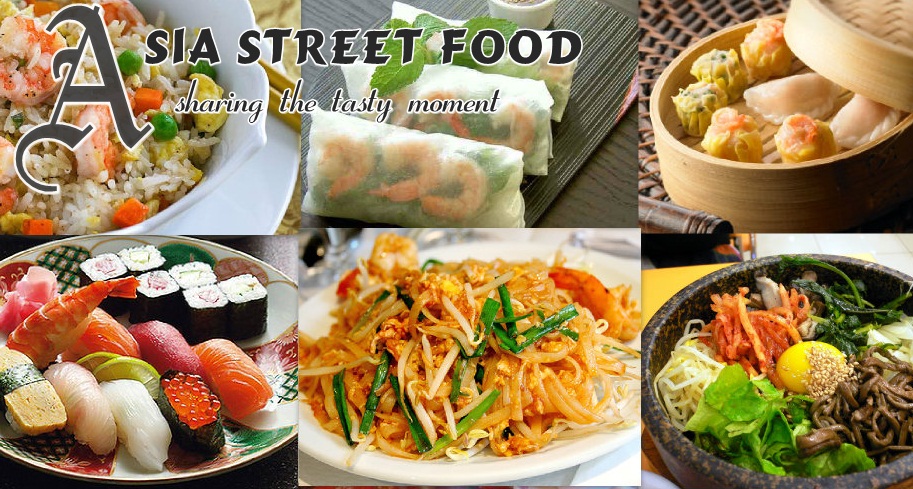
The term “street foods” describes a wide range of ready-to-eat foods and beverages sold and sometimes prepared in public places, notably streets.2 Like fast foods, the final preparation of street foods occurs when the customer orders the meal which can be consumed where it is purchased or taken away. Street foods and fast foods are low in cost compared with restaurant meals and offer an attractive alternative to home-cooked food. In spite of these similarities, street food and fast food enterprises differ in variety, environment, marketing techniques and ownership.
Street food in Asia is something that supports the development of cities, provides quick snacks for people in a rush, and enables poorer people with fewer cooking tools at home to buy food that is full of flavor and cultural history. Some of the found recipes are those which have gained international popularity, but their origins are rooted deep in Asian culture, as well as disputes between countries claiming to have created them.
Here are the types of street food you might come across there:
Bánh Mì – Vietnam
Bánh mì literally means “wheat bread” although you could simply call it a baguette sandwich. The baguette is a remnant of French colonialism, but if you think these sandwiches bear any resemblance to French food, you’d be wrong.
The Bánh mì stalls are everywhere in Vietnam and the different types of fillings are mind boggling. You can get sardines, grilled chicken, Vietnamese sausage, pork liver pate, and much more. It’s usually accompanied by some pickled vegetables and it tends to be ultra-cheap!
Nasi Goreng – Malaysia
It’s believed that Nasi Goreng has its roots in China where throwing away uneaten food was a taboo. In this case, we’re talking about rice which is the main ingredient of Nasi Goreng, a stir-fried rice.
Although you can find stir-fried rice everywhere in Asia, the Malay version has a distinct flavor as they tend to use copious amounts of sweet soy sauce and shrimp paste. When you add to that shallots, chili peppers, nutmeg, turmeric, and ginger, you can expect a delicious dish. I’m not sure I’d have it for breakfast like they do it in Malaysia!
Pad Thai – Thailand
Pad Thai is pure Thai goodness. The first time I had it I just couldn’t believe the size of the portion and what I paid for it (40 baht or ~ $1.15 USD). It’s one of Thailand’s most famous dishes and you have to try it to understand why.
It would be an understatement to just call it stir-fried rice noodles. When you add the eggs, tofu, the pulp of tamarind, some dried shrimp, a plethora of other spices, and finish it off with some roast peanuts, the result is mouthwatering!
Balut – Philippines
(“bah-loot,” both singular and plural) is a famous Filipino food that tends to either fascinate or revolt foreigners. It is a 16-to-21-day-old fertilized duck egg that contains not only a yolk but also a semi-developed duck embryo. Often hailed as one of the Philippines’ most iconic and exotic delicacies, it is cracked open and eaten with a dash of salt and not much else.
Mohinga – Myanmar
Many consider Mohinga as the national dish of Myanmar and when you see that it’s readily available everywhere, you understand why. Although it’s traditionally eaten for breakfast, you can find it throughout the day.
Mohinga is a rice noodle fish soup served with onion fritters, lemongrass, ginger, and many more spices. It took me a while to have it for breakfast, but once I did, it was always a great start to the day!
Larb – Laos
Larb is a type of minced meat salad which is considered to be the national dish of Laos. It can be made with all kinds of meat (beef, chicken, fish, pork, etc) and it’s usually flavored with fish sauce and lime juice.
It also contains padaek, which is a type of fish sauce made from freshwater fish. It’s commonly served with toasted ground rice (Khao Khua) and a selection of vegetables.
Martabak – Indonesia
Martabak is a type of filled pancake found all over Indonesia. It has roots in the Middle East and is actually a famous dish in Yemen, India, Malaysia, and Singapore. It’s thought to have been brought to Southeast Asia by Tamil Muslim traders.
The Indonesian version resembles the classic roti which is sold in Thailand, but filled with egg and meat. You can also have it sweet and that one tends to look more like a pancake. It’s usually filled with dark chocolate, margarine, cheese, and condensed milk!
Carrot Cake (Chai tow kway) – Singapore
If you’re walking around Singaporean food stalls and spot one selling carrot cakes, I’m here to tell you it’s most definitely not carrot cake! The problem comes with its loose translation, where the word radish means white carrot.
The dish is a stir fry of cubed radish cake with preserved radish, eggs, and lots of spices. The “cake” is traditionally steamed and can sometimes be made of yam. You can have the “white” or “black” option, which is soaked with soy sauce.
Lok Lak- Cambodia
Lok Lak is a hot salad comprised of stir-fried beef served on a bed of lettuce, tomatoes, cucumbers, and fresh onions. It’s usually accompanied by a sauce made with lime juice, black pepper, and Kampot pepper.
The funny thing is that this dish is a variation of the Bò Lúc Lắc, which is a Vietnamese dish inspired by the French. It literally means “shaking beef.”
Chinese Dumplings (Jiaozi) – China
Chinese dumplings are one of the most famous Chinese dishes. They’re extremely versatile being consumed for breakfast, lunch, or dinner. They can also be eaten as snacks, side dishes, or even main courses.
They’re basically thinly rolled dough parcels filled with meat or vegetables that can be boiled, steamed, or pan fried. They’re typically served in small containers with 10 pieces and they’re a popular food for the Chinese New Year.
Bakso – Indonesia
Another traditional street food from Indonesia is Bakso which simply means meatballs or meat paste. Beef is ground with tapioca flour and salt, but it can also be made with chicken or fish. The dough is then boiled, dried, stored, and refrigerated.
It’s commonly served in a broth with noodles, vegetables, tofu, eggs, bean sprouts, and Chinese cabbage. It can also be filled with cheese and sometimes even grilled like satay, another famous Indonesian street food.
Stinky Tofu – Taiwan
I’m sure you would never try this dish if you only knew it by the name, but trust me, it’s tasty! The food gets its particular smell due to its long fermentation, which can take months. The fermented brine is prepared mainly with milk, vegetables, and meat. Sometimes, it has dried shrimps, mustard greens, and bamboo shoots too.
In Taiwan, it’s traditionally served deep fried with sour pickled vegetables or as a base for a soup containing goose blood, mustard greens, and pork intestines, which is usually oily and super spicy.
Fish Amok – Cambodia
If Lok Lak didn’t pique your interest, you might be swayed by Fish Amok. “Amok” refers to the steaming process of preparing curry on banana leaves. When you add fish, fish paste, generous amounts of coconut milk, salt, limes, and red peppers, you find an incredibly tasty Khmer dish.
It’s served inside banana leaf cups, accompanied with a big portion of rice. If fish is not for you, you can find different versions made with chicken or tofu – sometimes even snails!
Sannakji – South Korea
Sannakji comes under the list of Hoe, which means raw food dishes in Korean cuisine. It is a dish with live octopus, which can either be eaten whole or rolled with chopsticks. The octopus is only served with a bowl of sesame one, otherwise, it will stick in the throat. Other ingredients may be a bowl of mixed chili paste, vinegar, and sugar as dipping sauces.
In some regions in South Korea and other nations, Sannakji is served whole. Many people also love eating the whole octopus. However, it is generally considered dangerous to eat unsliced octopus. One could start choking anytime. Many South Koreans offer this dish to the foreigners for an exciting experience.
Fried Bamboo Worms – Thailand
A bag of crisps has a lot in common with a serving of fried insects. They are both tasty, greasy, cheap and are great with beer, but fried insects definitely have an edge over crisps, both in terms of nutritious value and the exotic element. You won’t just find one type, but an entire ramp of species glistening under the bright-neon lights of a hawker’s push-cart, from finger food like bamboo worms and crickets to the ominous-looking scorpions and what seems to be like an entire colony of ants: the queen, her second-in-command and all the workers as well.

 Asian Famous Street Foods